
Basement Water Damage in the USA
Splash Pro Water Damage Restoration treats Basement Water Damage by first removing standing water and then addressing the moisture that travels through soil against foundation walls. Technicians measure relative humidity and surface moisture to determine how far water has wicked into concrete and framing. This approach prevents trapped dampness from feeding hidden mold colonies or weakening floor joists over time.
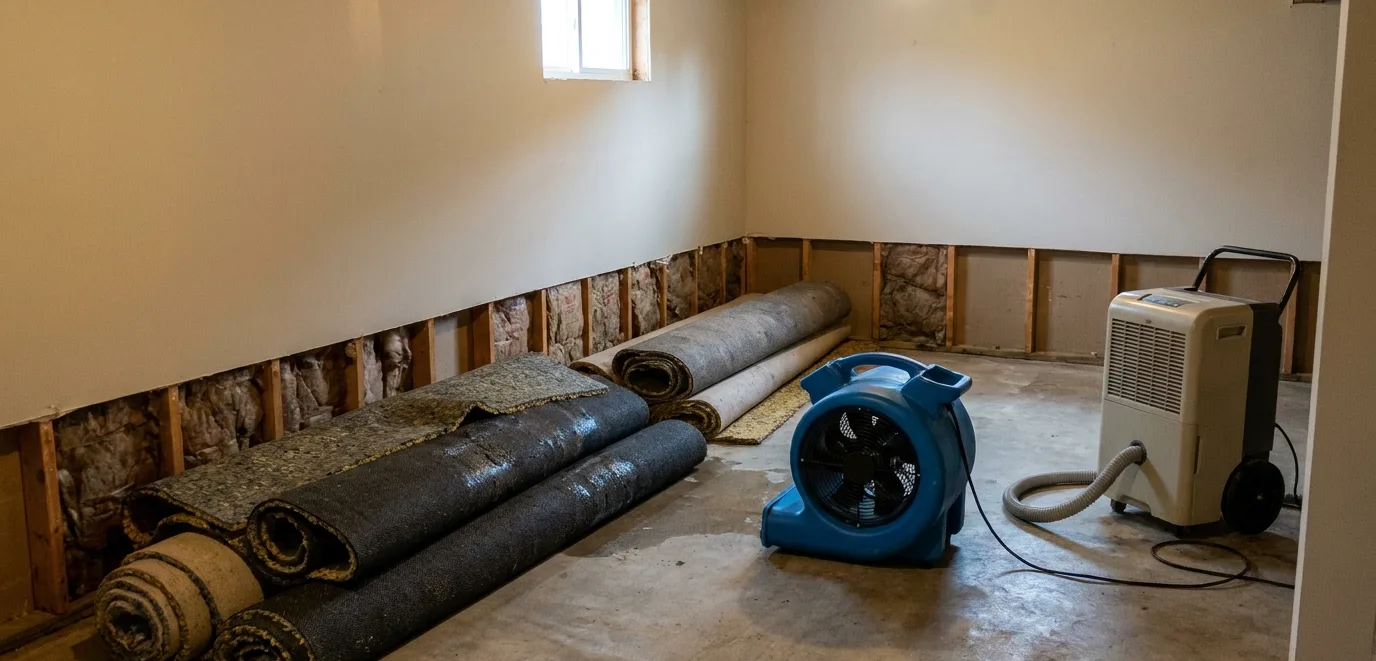
Our technicians focus on the physics of evaporation inside enclosed basement volumes where air circulation is limited. They set up air movers and dehumidifiers in sequences that pull moisture from masonry pores without pushing humidity into living areas above. Each drying zone is monitored separately because soil contact keeps basement slabs cooler than upper floors. Vapor pressure differences drive the evaporation that Splash Pro Water Damage Restoration accelerates during every basement water damage project across the USA.
Observable Indicators of Basement Water Damage
- Efflorescence deposits forming white powdery lines on concrete walls near floor level.
- Musty odors that intensify when HVAC systems pull air from the basement.
- Buckling or cupping of laminate flooring installed directly on the slab.
- Dark discoloration along the bottom edge of drywall or wood baseboards.
- Water droplets forming on cold water pipes or sump pit lids after heavy rain.
Primary Causes of Water Intrusion in Basements
Hydrostatic pressure from saturated soil pushes water through cracks in poured concrete or mortar joints in block foundations. Splash Pro Water Damage Restoration crews trace these entry points by following water stains upward from the footing. Clay-heavy soils expand when wet and exert continuous force that widens existing fissures over successive storms.
Sump pump failures or blocked discharge lines allow groundwater to rise above the slab level. Poor grading around the exterior perimeter channels roof runoff and lawn irrigation directly against the foundation. Technicians note the slope of window wells and the condition of exterior drains because these details determine how much water reaches the basement envelope during normal rainfall.
Inspection and Measurement Procedures
Technicians begin by recording ambient temperature and relative humidity at multiple heights within the basement. They then use penetrating and pinless moisture meters on walls at six-inch increments from the floor to locate the moisture gradient. Thermal cameras reveal cooler zones where water remains trapped inside the concrete mass even after visible puddles are gone.
Floor coverings are lifted in representative areas to inspect the slab for capillary rise. Wood framing members behind finished walls are probed for elevated moisture content that could support decay. All readings are logged against the material type because drywall wicks differently than oriented strand board or plaster.
Drying Equipment and Material Choices
Low-grain refrigerant dehumidifiers are positioned to maintain vapor pressure differentials that pull moisture from masonry. Air movers are angled to create airflow across the slab and up the walls without lifting settled dust into living spaces. Desiccant units supplement when outdoor humidity remains high and basement temperatures stay below sixty degrees.
When saturated insulation must be removed, closed-cell foam board is sometimes installed later as a replacement thermal break against the foundation. Antimicrobial agents are applied only to non-porous surfaces after loose debris is extracted. All equipment is staged so cords and ducts do not cross doorways that separate the work zone from occupied areas.
Safe Actions Before Technicians Arrive
Homeowners should shut off electrical circuits serving the affected basement area only if water has reached outlets or appliances. Valuable items stored on lower shelves can be moved to higher ground while avoiding contact with wet surfaces. Exterior downspouts should be redirected away from the foundation if this can be done without entering standing water.
Windows and doors leading to the basement should remain closed to limit humidity exchange with the rest of the house. Sump pump power should be verified only from a dry location. These steps reduce additional water entry and keep occupants away from potential electrical hazards until Splash Pro Water Damage Restoration crews establish containment.
Basement Water Damage questions
How does hydrostatic pressure affect basement drying times?
Hydrostatic pressure forces additional water into concrete pores even after surface water is removed. Technicians monitor moisture meter readings over several days because the slab continues to release water that was driven inward under pressure. Drying cycles are extended until equilibrium readings are reached at multiple depths.
What materials are typically removed during basement water damage work?
Carpet padding, saturated drywall below the water line, and fiberglass batt insulation in contact with wet concrete are removed. These materials absorb and hold moisture long after visible water disappears, so replacement prevents recurring mold growth once drying equipment is turned off.
Why are multiple moisture readings taken at different heights?
Water rises through capillary action at varying rates depending on material density. Readings at six-inch intervals map the actual wicking height so drying equipment can be focused where moisture concentration is highest rather than treating the entire wall uniformly.
Can homeowners safely run fans before professional equipment arrives?
Standard household fans can spread spores if mold is already present and do not lower vapor pressure effectively. Splash Pro Water Damage Restoration uses controlled airflow patterns and dehumidification that household units cannot replicate without risking cross-contamination into upper levels.
Address Basement Water Damage
Contact Splash Pro Water Damage Restoration to begin moisture mapping and targeted drying of the affected basement areas.