
Flood Damage Cleanup in the USA
Flooding introduces large volumes of water that saturate porous materials and create high indoor humidity. Splash Pro Water Damage Restoration technicians begin by removing bulk water with extraction equipment then set up air movers and dehumidifiers positioned to pull moisture from carpets padding and wall cavities. This sequence lowers relative humidity below the level that supports mold while preventing further wicking along base plates and into insulation.
Technicians track drying progress with pin and pinless meters at multiple depths in flooring and drywall. Readings guide adjustments to equipment placement until equilibrium moisture content matches unaffected areas. Once dry the team removes any remaining soiled materials and prepares surfaces for repairs that restore the original assembly without trapping residual dampness. Homeowners monitor humidity levels while Splash Pro Water Damage Restoration manages evaporation rates during flood damage cleanup operations.
Warning Signs of Flood Saturation
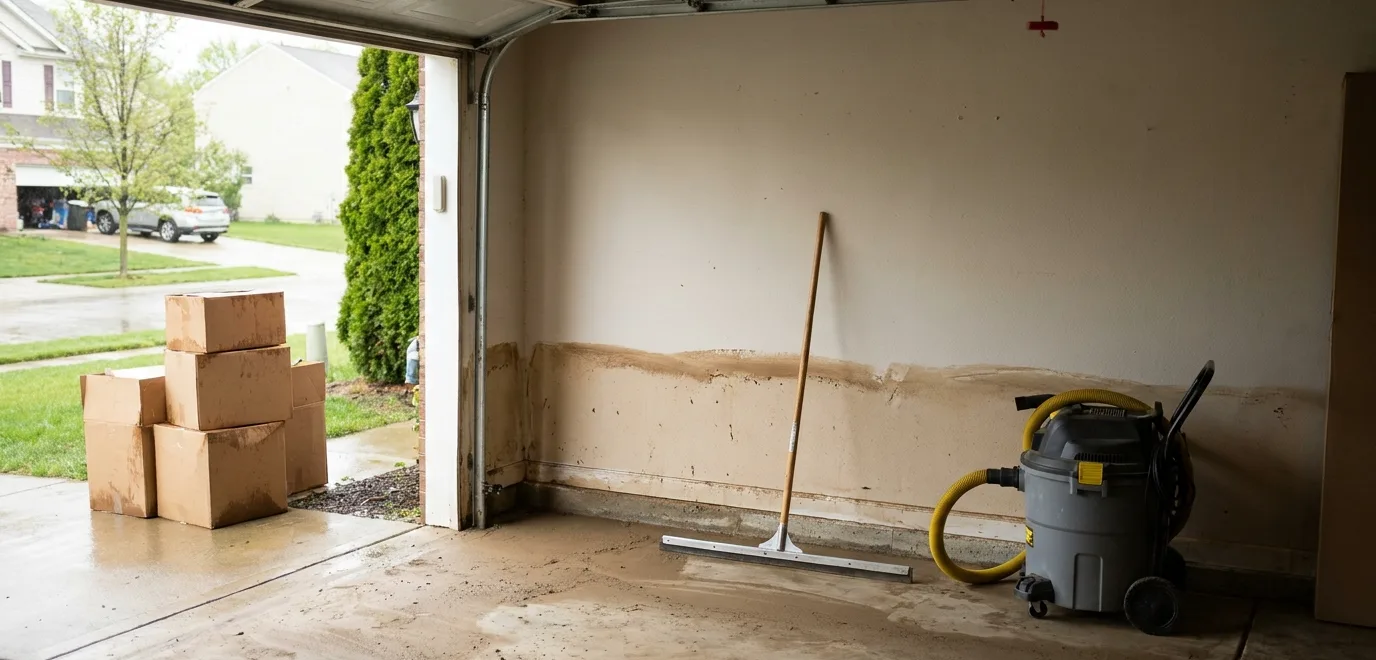
- Dark tide lines visible on lower drywall from rising water.
- Soft or springy carpet that releases water when pressed.
- Musty odor growing stronger near baseboards after several days.
- Discolored grout or buckling hardwood indicating subfloor moisture.
- Doors that stick or swell because of elevated humidity.
How Flood Water Enters and Spreads
Water from external flooding forces its way through foundation cracks door thresholds and utility penetrations. Once inside it pools on slab surfaces then wicks upward into wall cavities through capillary action in drywall paper and wood studs. Elevated humidity follows as evaporation begins filling the living space with moist air that condenses on cooler surfaces.
Splash Pro Water Damage Restoration crews trace the path of water migration by lifting baseboards and checking behind cabinets. This reveals how far moisture has traveled beyond the visible water line so drying equipment can be placed to reach every affected layer.
Inspection Measurements Taken on Site
Technicians record initial moisture content in concrete slabs wood framing and gypsum board using calibrated meters. They also log ambient temperature and relative humidity to calculate the vapor pressure differential needed for effective evaporation. These numbers establish a baseline that determines how many air movers and dehumidifiers to deploy.
Further checks include thermal imaging to locate cooler damp zones behind finished surfaces and core sampling of carpet padding when saturation depth is uncertain. All readings are logged so progress can be compared daily until target dryness is reached.
Drying Sequence and Equipment Placement
After extraction the crew positions air movers at a 45 degree angle along walls to create airflow across wet surfaces. Dehumidifiers are centralized to pull humid air from the room while condensate is drained outside. Technicians rotate equipment every 24 hours based on meter readings to maintain the evaporation rate without overheating materials.
When hidden cavities are involved small holes are drilled at the base of walls or toe kicks removed to allow direct airflow. This prevents moisture from remaining trapped and causing secondary swelling or microbial growth.
First Steps Homeowners Can Take
Homeowners should shut off electricity to affected areas if standing water is present and avoid entering rooms where wiring may be submerged. Moving furniture away from wet walls reduces further staining while opening windows on dry days can begin lowering indoor humidity until technicians arrive.
Do not attempt to run household fans directly on wet carpet because they can spread contaminants. Instead note any electrical appliances that contacted water and list rooms where water crossed thresholds so the crew can prioritize those zones upon arrival.
Flood Damage Cleanup questions
What causes hidden moisture after flooding?
Water wicks through base plates into wall cavities and under flooring. Without meters these damp areas stay undetected while humidity remains high enough for mold to form on the back side of drywall.
How long does drying take after flood water removal?
Duration depends on material thickness and initial saturation. Daily meter checks show when wood and gypsum reach equilibrium. Technicians adjust airflow and dehumidification until readings stabilize across all measured depths.
Can homeowners safely remove standing water themselves?
Small amounts on hard surfaces can be extracted with a wet vacuum after power is secured. Deeper saturation in carpet or drywall requires professional equipment to prevent wicking into adjacent assemblies.
What materials are often replaced after flooding?
Saturated carpet padding and any drywall below the water line are removed. Subfloor sections that remain soft after drying or insulation that holds water are also replaced before new finishes are installed.
Begin Flood Damage Cleanup
Contact Splash Pro Water Damage Restoration to start moisture mapping and controlled drying for flood affected areas.