
Storm Water Damage in the USA
Storm water enters structures when heavy rainfall exceeds roof drainage capacity or forces water under siding and through window seals. Splash Pro Water Damage Restoration technicians trace the paths water follows once it penetrates exterior barriers and reaches interior cavities. They measure absorbed moisture levels in framing and insulation to determine the full extent of saturation before any drying begins.
Wind pressure during storms can push water laterally across flat surfaces and into wall cavities where it travels downward by gravity and capillary action. Our teams focus on locating these hidden reservoirs because surface water represents only the visible portion of total moisture. Proper extraction prevents residual humidity from migrating into adjacent rooms and causing secondary saturation in drywall or flooring. Layered materials hold trapped water that only Splash Pro Water Damage Restoration equipment can fully extract in storm water damage cases within the USA.
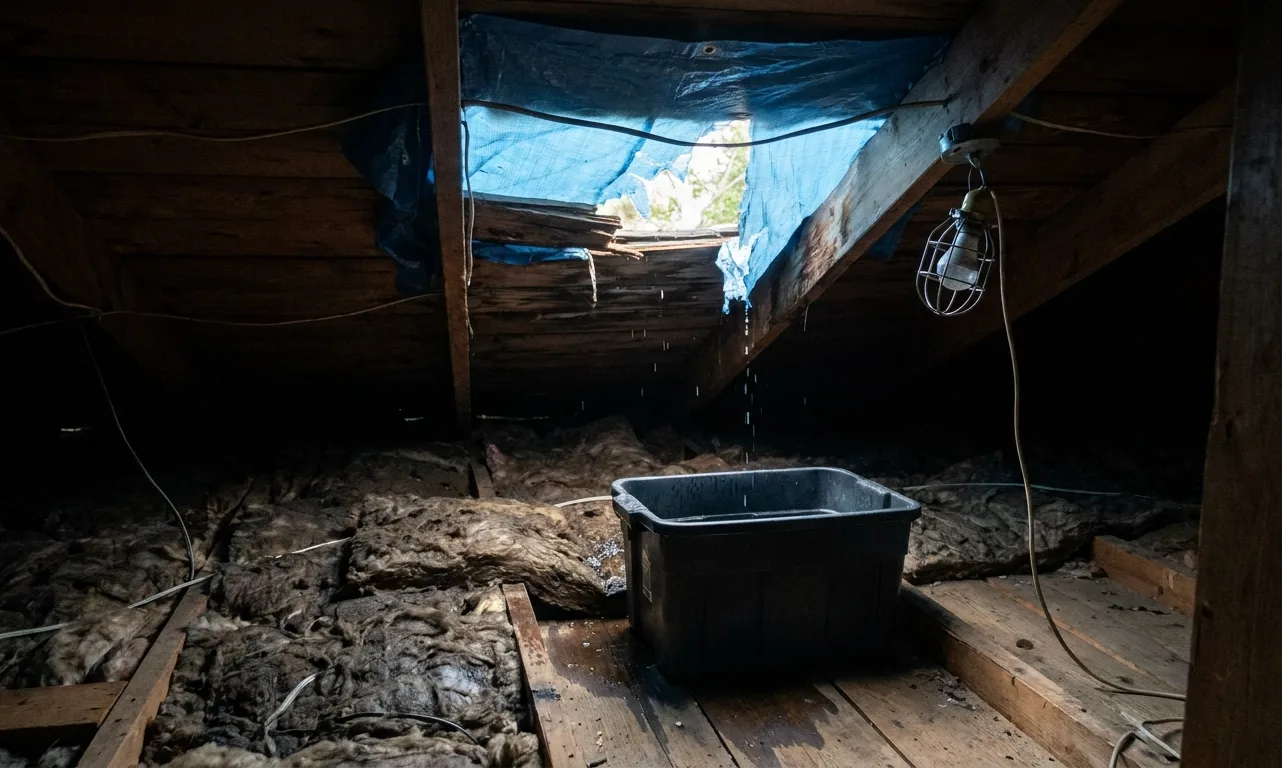
Observable Indicators After Storm Events
- Discolored streaks forming along ceiling drywall joints
- Bubbling or peeling paint on exterior-facing walls
- Musty odor rising from floor registers after rain stops
- Soft spots developing under carpet in ground-level rooms
- Water droplets appearing at electrical outlet cover edges
How Storm Water Travels Through Building Materials
Rain driven by high winds follows the path of least resistance and collects at roof valleys or behind gutters before seeping under shingles. Once inside the attic, water spreads across sheathing and drips onto ceiling joists. Capillary wicking then pulls moisture laterally into insulation batts where it remains trapped until extracted.
On exterior walls, water travels downward behind siding and pools at the sill plate. From there it can migrate into subflooring through small gaps. Technicians track these routes with moisture meters because visible stains rarely match the actual wet footprint inside cavities.
Measurements Taken During Initial Assessment
Technicians record relative humidity in each affected room and compare it to unaffected areas to establish baseline conditions. They probe baseboards and flooring with pin meters to detect elevated moisture content that indicates hidden saturation. Thermal imaging identifies temperature differentials caused by evaporative cooling in wet materials.
Readings are logged at multiple depths in walls to map the vertical extent of water migration. These data points guide equipment placement so that airflow targets the wettest zones first. Without accurate mapping, drying cycles extend and humidity can redistribute into previously dry rooms.
Drying Equipment and Sequence Used
Splash Pro Water Damage Restoration deploys air movers to create directed airflow across wet surfaces, increasing the rate of evaporation from exposed materials. Dehumidifiers are positioned to capture the released moisture and maintain low ambient humidity so that drying continues without reabsorption. Equipment is adjusted daily based on updated meter readings.
When water has reached subfloor cavities, targeted drying mats are applied to pull moisture from below finished flooring. This prevents warping while allowing the structure to return to equilibrium moisture content. All equipment remains in place until successive readings show consistent dry values across the affected area.
Homeowner Steps Before Technicians Arrive
Homeowners should shut off electricity to rooms with standing water if it is safe to reach the breaker panel without entering wet areas. Valuables and documents on lower shelves or floors should be moved to dry locations to limit further exposure. Opening interior doors helps equalize air pressure but exterior doors and windows should stay closed to avoid drawing humid outside air inward.
Avoid walking on saturated carpet or flooring because compression forces water deeper into padding and subfloor. Do not attempt to use household fans until power is confirmed safe, as electrical hazards may exist behind walls. These actions limit additional damage until Splash Pro Water Damage Restoration arrives with proper extraction tools.
Storm Water Damage questions
What causes storm water to enter walls instead of staying on the roof?
High winds force water under flashing and into gaps around vents or skylights. Once inside, gravity and wicking carry it down wall cavities where it soaks insulation and sheathing before reaching interior surfaces.
How do technicians confirm that hidden cavities are fully dry?
Multiple moisture meter readings are taken at different depths and heights over several days. Consistent low values combined with stable room humidity confirm that evaporation has removed residual water from all layers.
Can storm water affect upper floors without visible roof leaks?
Yes, water can travel horizontally along roof decks and enter wall tops, then move downward several stories through stud cavities before appearing at baseboards on lower levels.
What materials are most likely to retain moisture after extraction?
Dense insulation, hardwood flooring, and thick drywall hold water longer because their structure limits airflow. Technicians remove or isolate these materials when meter readings show prolonged saturation.
Schedule Storm Water Damage Assessment
Contact Splash Pro Water Damage Restoration to begin moisture mapping and extraction after storm intrusion.