Mold Remediation in the USA
Mold forms when water intrusion leaves materials damp long enough for spores already present in air to settle and grow. Splash Pro Water Damage Restoration crews begin by tracing the original moisture path through floors, walls, and ceilings, using meters to record moisture levels before any drying equipment is placed. This step shows which building materials absorbed water and how far the dampness traveled along wood framing or drywall.
Once readings confirm the wet zones, our technicians remove standing water and set up air movers and dehumidifiers sized to the square footage. The equipment creates airflow across surfaces so evaporation can pull moisture outward while the dehumidifiers capture the released vapor. Daily moisture checks continue until readings drop to levels that no longer support mold. Moisture wicking from walls requires professional attention from Splash Pro Water Damage Restoration when handling mold remediation in the USA.
Visible and Hidden Indicators of Mold
- Discolored patches appear on walls or ceilings near past leaks.
- A persistent earthy or musty smell lingers in closed rooms.
- Soft or crumbling drywall edges near baseboards after water exposure.
- Condensation forms repeatedly on windows or cold pipes in the same area.
- Allergic reactions increase when spending time in one section of the home.
How Excess Moisture Creates Conditions for Mold
Water that enters through a roof leak or pipe failure soaks into porous materials and stays trapped behind finishes. As the liquid migrates, it raises the moisture content of framing lumber and insulation above the threshold where mold can draw nutrients. Splash Pro Water Damage Restoration records these elevated readings so drying can target each layer rather than only the visible surface.
Humidity in the surrounding air also rises when evaporation begins from wet materials. If that humidity is not lowered, spores that land on damp surfaces continue to colonize. Our crews monitor relative humidity at multiple heights and adjust dehumidifier settings until the air no longer supplies the water vapor mold requires.
Inspection Steps Our Technicians Follow on Site
Technicians first locate the original water entry point and map every direction moisture has traveled. They use pin and pinless meters on drywall, subfloors, and base trim to create a moisture profile that guides equipment placement. Thermal imaging helps reveal temperature differences that indicate hidden wet cavities behind cabinets or under flooring.
Air samples and surface swabs are collected only after the moisture map is complete. These samples identify the types of mold present so removal methods can be matched to the growth. All findings are logged before any containment or drying work starts.
Drying and Material Replacement Process
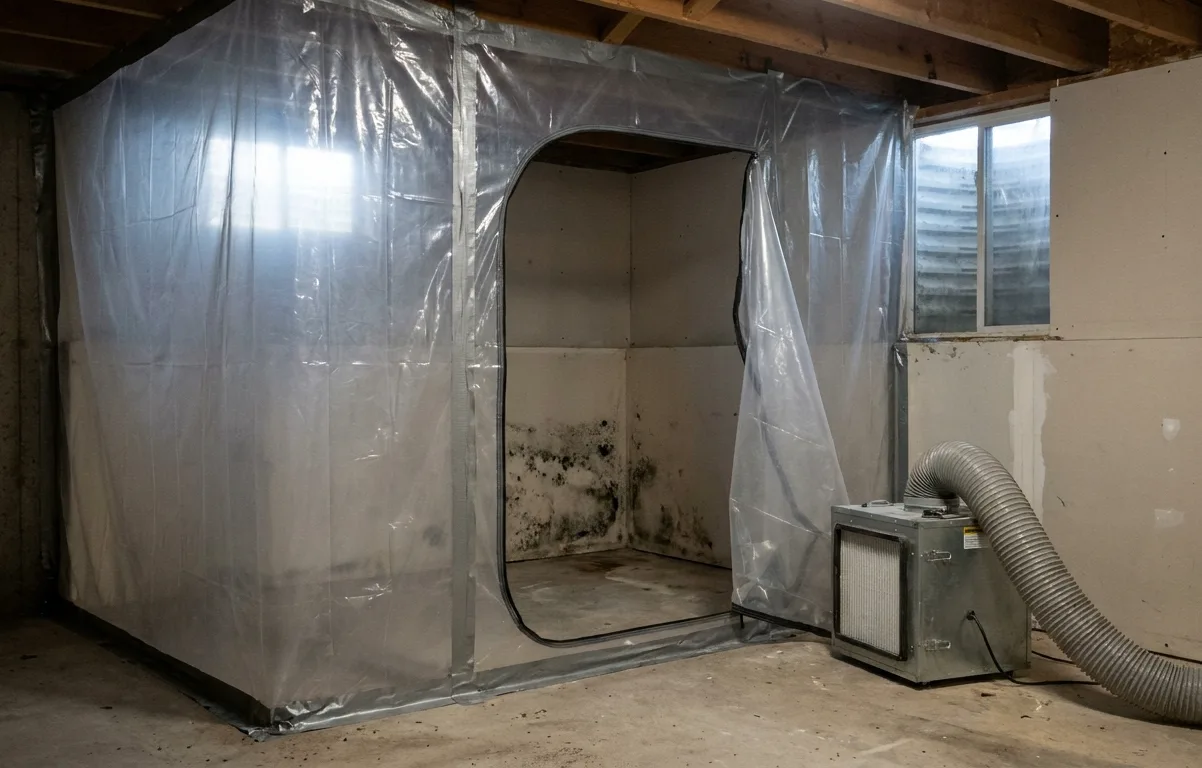
After containment is set, Splash Pro Water Damage Restoration removes saturated drywall sections and insulation that cannot be salvaged. Remaining surfaces receive continuous airflow from strategically placed air movers while refrigerant dehumidifiers pull moisture from the air. Moisture readings are taken each day to confirm progress and adjust equipment.
When readings stabilize at acceptable levels, new drywall and insulation are installed. Joints are taped and finished so the repaired area matches the surrounding surfaces. Final humidity checks verify the space has returned to conditions that discourage future mold growth.
First Actions Homeowners Can Take Safely
Homeowners should shut off the water supply at the main valve if a visible leak is active and electricity to any submerged outlets only if it is safe to reach the breaker. Opening windows on dry days can help lower indoor humidity while waiting for technicians, but fans should not be used if sewage or contaminated water is involved.
Personal belongings in the affected zone should be moved to a dry area when possible. Any standing water that can be removed with a wet vac or towels reduces the total volume that must be extracted later. These steps limit further wicking into adjacent materials until Splash Pro Water Damage Restoration arrives.
Mold Remediation questions
What causes mold after water damage?
Mold grows when materials stay above twenty percent moisture content for more than forty eight hours. Spores settle on wet drywall, wood, or carpet padding and begin breaking down the fibers as a food source. Splash Pro Water Damage Restoration measures each layer to find where the moisture remains trapped.
How do you locate hidden mold?
Technicians insert moisture meters into walls at multiple points and scan with infrared cameras to detect temperature differences caused by evaporating water. These readings guide removal of baseboards or small test cuts so growth behind finishes can be confirmed without unnecessary demolition.
Can I clean mold myself?
Small surface spots on hard materials can be wiped after the moisture source is fixed, yet mold inside wall cavities requires negative air machines and HEPA filtration to prevent spores from spreading. Splash Pro Water Damage Restoration handles containment and disposal of contaminated materials that homeowners should not disturb.
Will drying alone remove mold?
Drying stops additional growth by lowering moisture and humidity below the level mold needs, yet existing colonies and their roots must still be physically removed from porous surfaces. Our crews combine extraction, drying, and surface cleaning so the structure returns to a dry state that does not support recurrence.
Schedule Mold Remediation
Contact Splash Pro Water Damage Restoration to begin moisture mapping and drying for your property.