Sewage Cleanup in the USA
Splash Pro Water Damage Restoration technicians begin every sewage response by containing the spill zone to stop waste from traveling through floor seams or HVAC returns. Liquid waste quickly saturates baseboards and subfloor sheathing where it wicks upward through capillary action. Once standing water is removed, remaining moisture must be drawn out through controlled airflow and dehumidification so humidity does not linger and promote further material breakdown.
Homeowners facing a sewage event should shut off the water supply if safe, avoid walking through wet rooms, and open windows only when outside air is drier than indoor conditions. These steps reduce the volume of liquid that can migrate into wall cavities before arrival. Technicians then document moisture readings on every affected surface to create a drying plan that targets hidden pockets behind cabinets and under appliances. Standing water removal precedes the use of dehumidifiers by Splash Pro Water Damage Restoration specialists addressing sewage cleanup throughout the USA.
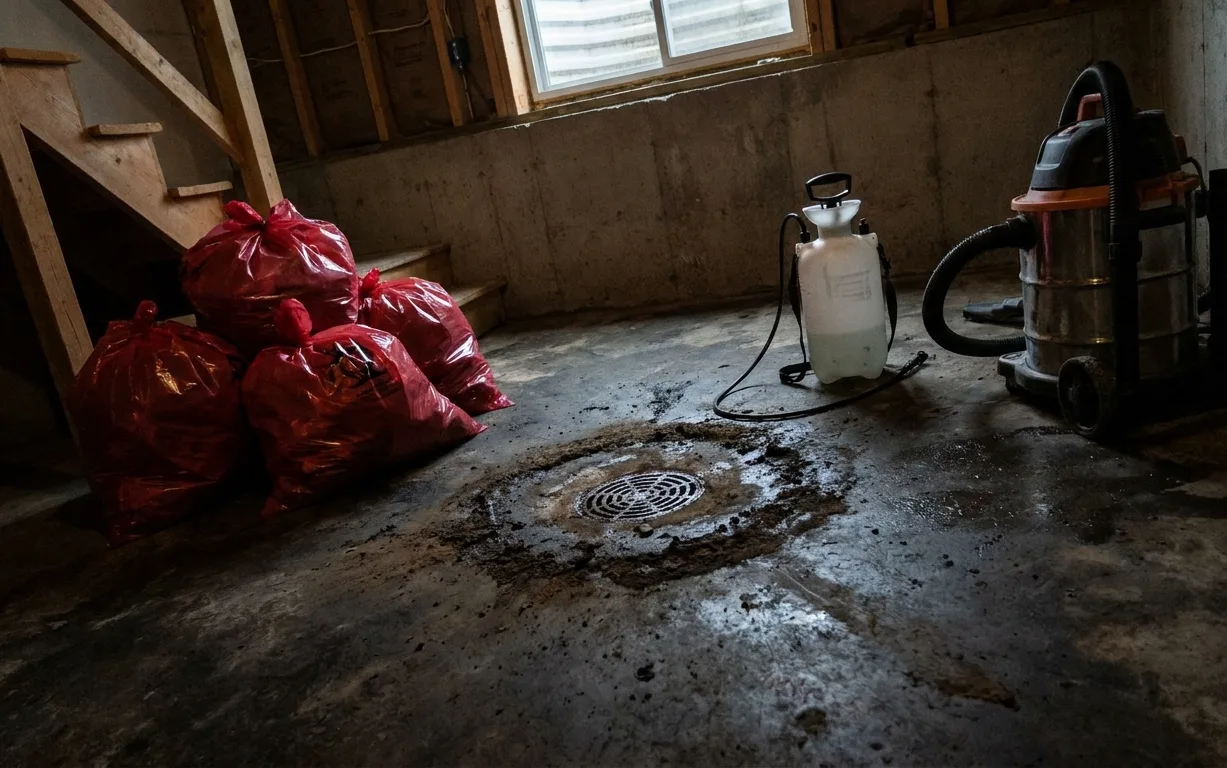
Warning Signs of Sewage Contamination
- Strong odors coming from floor drains or baseboards
- Discolored water seeping at toilet or tub seals
- Soft spots forming in vinyl or carpet near fixtures
- Slow drainage from multiple fixtures at once
- Visible waste residue along foundation cracks
Common Sources of Sewage Backups
Sewage enters living spaces when main lines clog from grease buildup, tree roots, or collapsed pipe sections. Pressure then forces waste backward through the lowest fixtures such as basement toilets or floor drains. Heavy rainfall can also overload municipal systems and push contaminated water into private laterals connected to the home.
Technicians trace the path of intrusion by following moisture gradients recorded with pin meters. They note whether liquid traveled under partitions or wicked into insulation within exterior walls. This mapping prevents incomplete drying that would leave elevated humidity in concealed cavities.
What Technicians Measure on Arrival
Upon entry the crew records ambient humidity and temperature to establish a baseline before any air movement begins. They then take moisture content readings at multiple depths in flooring and wall materials to locate the full extent of saturation. These numbers guide placement of air movers so evaporation occurs at the surface without pushing vapor deeper into wood framing.
Technicians also inspect for delaminated subfloor layers and softened drywall tape. Areas showing readings above twenty percent moisture content typically require removal to allow proper drying of the remaining structure. Documentation of each reading supports a sequential drying sequence that avoids re-wetting already processed surfaces.
Removal Choices for Contaminated Materials
Porous items such as carpet padding and particleboard vanities cannot be salvaged once sewage contacts them. Technicians cut out these sections in controlled strips to limit dust and odor release into adjacent rooms. Non-porous surfaces like tile or sealed concrete receive surface cleaning followed by repeated moisture checks until readings stabilize.
When wall cavities are involved, base plates and lower drywall are removed to expose studs for direct airflow. Technicians install drying equipment at angles that pull moist air away from the structure rather than recirculating it. Daily meter checks confirm when each layer has returned to acceptable equilibrium moisture levels.
Drying Sequence After Extraction
After bulk water removal, the focus shifts to lowering relative humidity below fifty percent so residual moisture evaporates from remaining materials. Air movers are positioned to create consistent airflow across wet surfaces while dehumidifiers capture the released vapor. Technicians adjust equipment daily based on new readings rather than running fixed schedules.
This methodical approach prevents moisture from wicking into previously dry areas such as upper cabinets or adjacent hallways. Once all monitored locations reach target dryness, final cleaning addresses any remaining residue on hard surfaces before the space is returned to normal use.
Sewage Cleanup questions
How long does sewage drying usually take?
Drying duration depends on the volume of water absorbed and the porosity of affected materials. Technicians monitor moisture meters each day and adjust airflow until readings stabilize across all layers.
Can I turn on fans myself before technicians arrive?
Running fans before extraction can spread aerosolized particles and increase humidity in unaffected rooms. Wait until technicians set up directed equipment after the liquid is removed.
What happens to items that cannot be dried?
Materials that remain saturated after extraction, such as padding or insulation, are removed in sections to prevent cross-contamination. Replacement occurs after the drying phase confirms stable moisture levels.
How do you keep humidity from spreading?
Technicians isolate the work zone with containment barriers and use dehumidifiers sized to the cubic footage. Continuous readings ensure humidity stays low enough for evaporation to finish without re-condensation on cool surfaces.
Schedule Sewage Cleanup
Technicians measure moisture in every layer and begin extraction to control humidity across the USA.