
Structural Drying in the USA
Splash Pro Water Damage Restoration handles Structural Drying by targeting water that has moved into porous building layers. Moisture travels through capillary action in drywall wood and concrete then lingers unless airflow and heat are applied in measured steps. Our technicians set up air movers and dehumidifiers to lower vapor pressure and pull water out as vapor rather than leaving it to migrate further into adjacent rooms.
After an event water often remains behind baseboards inside cavities and under subfloors. Without directed drying relative humidity stays high and materials stay damp allowing odors and further absorption into insulation or framing. We monitor conditions daily adjusting equipment placement to keep evaporation rates steady until moisture readings return to normal levels for the structure. Technicians check for hidden pockets of dampness before Splash Pro Water Damage Restoration completes the drying process on structural drying in the USA.
Warning Signs of Trapped Structural Moisture
- Soft or springy floor surfaces when walked on
- Discolored streaks appearing on interior walls
- Doors or cabinets that no longer close evenly
- Persistent earthy smell in closed rooms
- Peeling paint or wallpaper lifting at edges
How Water Enters and Remains in Structures
Water reaches structural layers through ceiling leaks wall penetrations or floor spills. Once inside it follows the path of least resistance moving along seams and soaking into gypsum wood fibers or concrete pores. Gravity and surface tension keep liquid in low spots while evaporation from exposed faces raises room humidity.
If humidity is not controlled the moisture gradient reverses and water wicks back toward drier zones. This cycle repeats until external drying forces exceed the material retention capacity. Our crews locate these reservoirs before starting equipment placement.
Materials differ in absorption rates. Oriented strand board holds water longer than solid lumber while vinyl flooring traps vapor beneath it. Knowing these differences guides which zones receive priority airflow.
Inspection Measurements and Equipment Setup
Technicians begin with moisture meters that give pin and pinless readings at multiple depths. Thermal cameras reveal temperature differences that indicate hidden wet zones behind finishes. These readings establish a baseline so progress can be tracked each visit without guesswork.
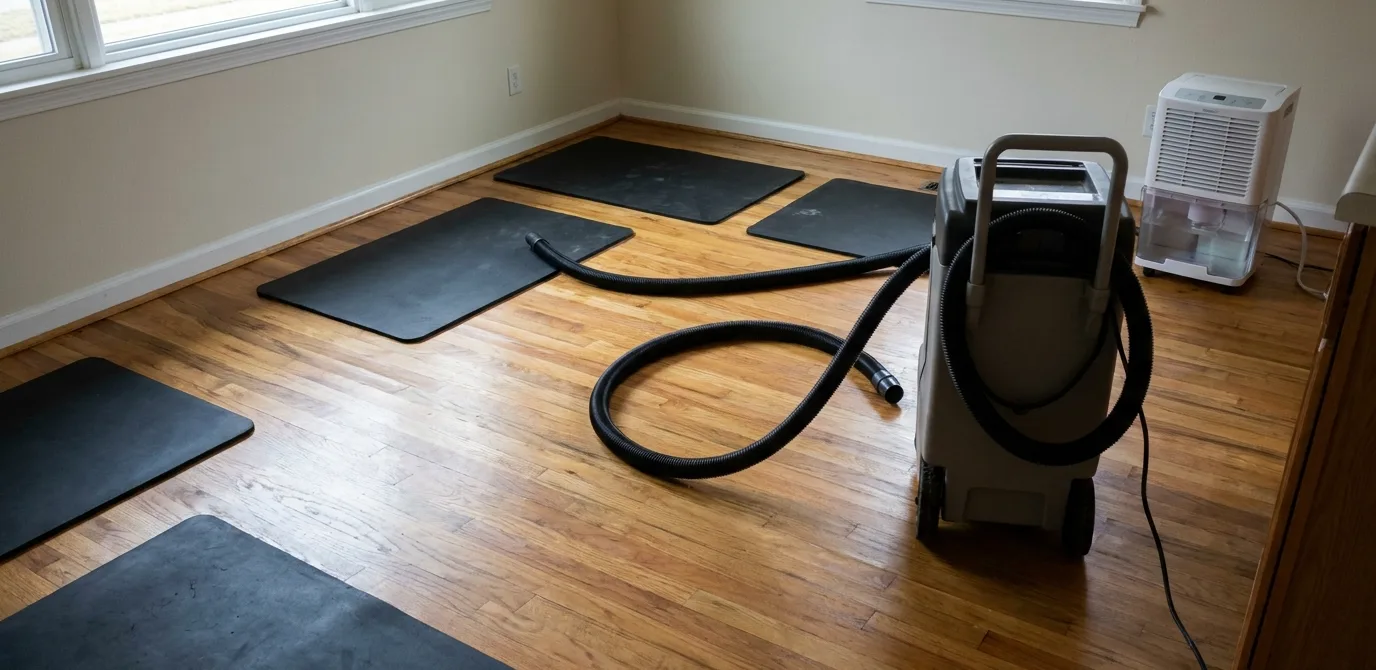
Air movers are positioned to create continuous airflow across wet surfaces while dehumidifiers pull vapor from the air. Placement follows the principle of moving the boundary layer of humid air away from the material face. Sensors inside the equipment log temperature and grains per pound to confirm conditions stay within the drying curve.
Daily logs compare new meter readings against the first set. When numbers stabilize across several locations extraction stops and the drying phase ends. This sequence prevents both under-drying and unnecessary equipment runtime.
Drying Sequence and Material Considerations
Standing water is removed first with extraction tools so that only bound moisture remains. Once surfaces are clear the focus shifts to cavities and layered assemblies. Small access points may be opened to allow air to reach wet insulation or subflooring without removing large sections.
Wood framing requires slower drying than drywall to avoid checking and warping. Concrete slabs release moisture upward over days so perimeter airflow is maintained longer. Each material receives its own drying goal based on published moisture content targets for that substrate.
When readings reach acceptable equilibrium levels equipment is removed in stages. This staged approach lets any remaining vapor equalize without sudden humidity spikes that could rewet finishes.
Initial Steps for Property Owners
Stop the water source if it can be done safely from outside the affected area. Move furniture and belongings away from wet zones to keep them dry and to give clear access for equipment. Open interior doors to improve air movement between rooms while avoiding forced airflow that could spread particles.
Avoid using household fans directly on wet surfaces because they often recirculate humid air without removing moisture. Do not attempt to cut into walls or lift flooring yourself because hidden electrical lines and plumbing may be present. Note any areas where water is actively dripping so the arriving crew can prioritize them.
Keep a simple record of rooms that received water and the time it was noticed. This information helps technicians map likely migration paths and set up drying zones efficiently on arrival.
Structural Drying questions
What makes structural drying different from simple cleanup?
Structural drying targets moisture inside cavities and layers that surface extraction cannot reach. Technicians measure hidden moisture then apply controlled airflow and dehumidification until readings stabilize. This prevents hidden water from causing later warping or odor.
How long does the drying process usually take?
Duration depends on material thickness water volume and starting humidity. Thin drywall may dry in two to three days while thick wood or concrete can require five or more. Daily meter checks determine when equipment can be removed.
Can homeowners run their own fans and dehumidifiers?
Household units lack the airflow volume and moisture removal capacity needed for structural layers. They also do not provide the logging data required to confirm drying progress. Professional equipment is sized and placed according to the building assembly.
What happens if moisture stays in the structure?
Remaining water raises local humidity and allows wicking into adjacent materials. Over time this leads to cupping floors musty odors and potential weakening of wood connections. Measured drying stops the process before these changes develop.
Schedule Structural Drying
Contact Splash Pro Water Damage Restoration to begin measured drying of affected building layers across the USA.