Ceiling Water Damage in the USA
Water reaches ceiling assemblies from roof penetrations, supply lines, or condensation drip points above the drywall. Once inside, liquid travels along joists and wicks into insulation, raising relative humidity in the enclosed space and slowing natural evaporation. Splash Pro Water Damage Restoration crews begin by mapping the affected area with moisture meters to determine the full extent before any drying equipment is placed.
Elevated humidity behind the finish surface allows mold spores to germinate within forty-eight hours when temperatures remain moderate. Our technicians isolate the leak, remove standing water from above if accessible, and set up air movers and dehumidifiers aimed at the cavity. This sequence forces moisture outward through controlled airflow rather than allowing it to migrate deeper into adjacent materials. Surface temperature readings guide the placement of drying equipment from Splash Pro Water Damage Restoration for effective ceiling water damage work in the USA.
Visible and Hidden Indicators
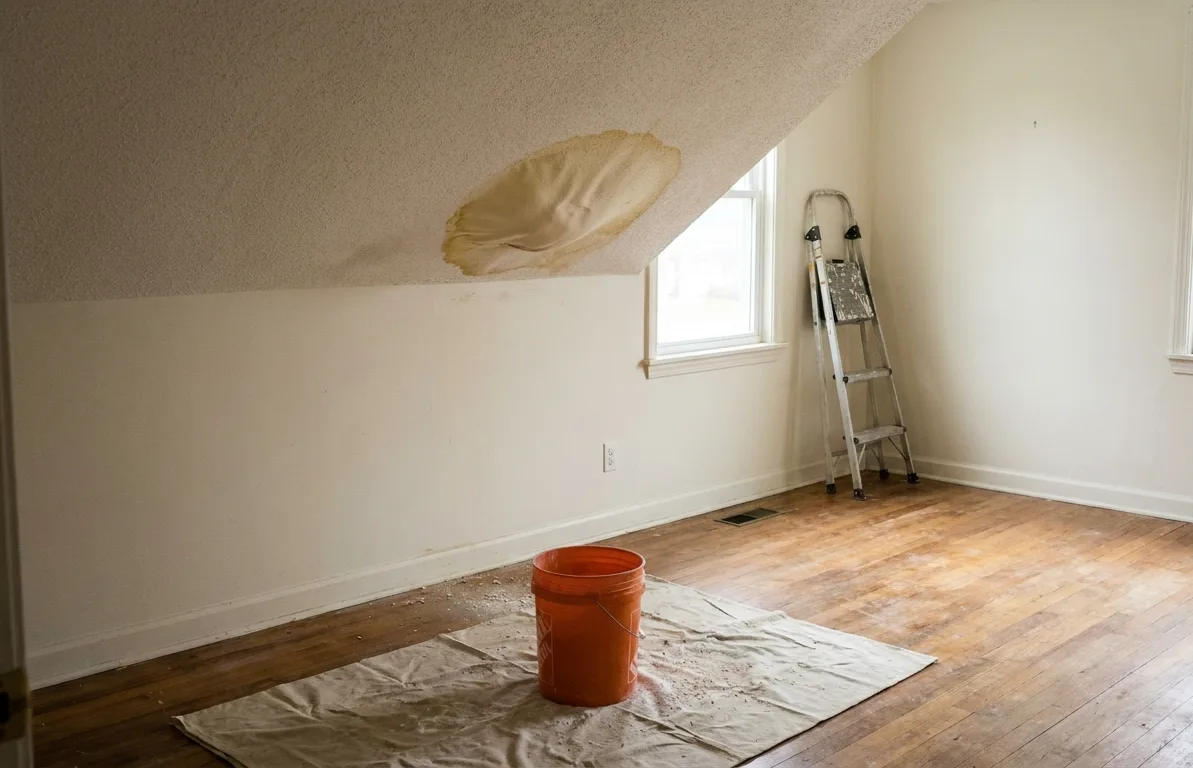
- Discolored rings or streaks on painted ceiling surfaces
- Soft or sagging drywall that flexes under light pressure
- Small drips appearing after heavy rainfall or appliance use
- Musty odor that intensifies when HVAC system runs
- Warm spots detected by infrared scan above the ceiling
Primary Leak Pathways in Overhead Structures
Roof flashing failures around vents and skylights allow rainwater to follow rafters until it pools above the ceiling. Bathroom exhaust fans with poor duct seals and overflowing condensate pans from upstairs air handlers create the same downward migration. Splash Pro Water Damage Restoration technicians trace each path by lifting attic insulation in sections and recording moisture readings at every joist bay.
Burst pipes or loose fittings in the floor above send pressurized water through holes in subflooring, saturating ceiling drywall from the top side. Technicians shut off the supply, relieve pressure, and document every wet layer before airflow begins.
Moisture Measurement and Cavity Inspection
Technicians insert pin-type meters through small test holes to read wood moisture content in joists and drywall paper. Non-invasive capacitance scanners then sweep the entire surface to locate hidden saturation without removing finishes. Thermal cameras reveal temperature differences caused by evaporative cooling in wet zones.
Insulation is examined for compression and staining. When cellulose or fiberglass holds more than twenty percent moisture by weight, it must be removed to allow the framing to dry to ambient levels. All readings are logged so progress can be verified after equipment placement.
Equipment Sequence for Controlled Drying
Air movers are positioned to create negative pressure in the ceiling cavity while dehumidifiers pull vapor from the room below. This setup maintains indoor relative humidity under fifty percent so moisture moves outward through diffusion rather than condensing again on cooler surfaces.
Daily meter checks determine when joist moisture drops below fourteen percent. At that point the drywall can often be left in place after antimicrobial treatment, but insulation replacement remains necessary if readings stay elevated.
Material Options After Drying Completes
Moisture-resistant drywall with fiberglass facing replaces standard paper-faced board in areas prone to future condensation. Closed-cell spray foam can be added selectively in attic spaces to reduce thermal bridging that encourages drip formation.
Technicians reinstall vapor barriers only after confirming the roof or pipe leak has been corrected by the appropriate trade. All removed debris is bagged and carried out to prevent cross-contamination during the final walkthrough.
Ceiling Water Damage questions
How quickly does ceiling moisture lead to mold?
Mold colonies form when drywall paper and insulation stay above sixty percent relative humidity for more than two days. Splash Pro Water Damage Restoration measures cavity humidity immediately and sets drying targets to interrupt that timeline.
Can homeowners safely remove wet ceiling tiles themselves?
Homeowners should avoid disturbing materials until power to affected circuits is confirmed off and standing water is no longer present. Any removal risks spreading spores or causing collapse of saturated sections onto floors below.
What equipment removes water from sealed ceiling cavities?
Air movers create directed flow across exposed surfaces while commercial dehumidifiers condense vapor extracted from the space. Small access openings allow tubing to reach insulation layers without full demolition.
When is drywall replacement required versus drying in place?
If moisture content exceeds twenty-five percent after forty-eight hours of drying or if paper facing shows delamination, full removal is performed. Lower readings allow the board to remain once insulation is exchanged and the cavity is sanitized.
Ceiling Water Damage Assessment
Contact Splash Pro Water Damage Restoration to schedule an inspection that identifies leak sources and begins drying before hidden damage spreads.